ASNT Certification in Non-Destructive Testing Methods!
Internationally Recognized Certifications in NDT
Earn ASNT certification, which will open doors for you in the world of Non-Destructive Testing (NDT). Our courses are designed to provide you with the knowledge and skills that will help you excel in the industry.
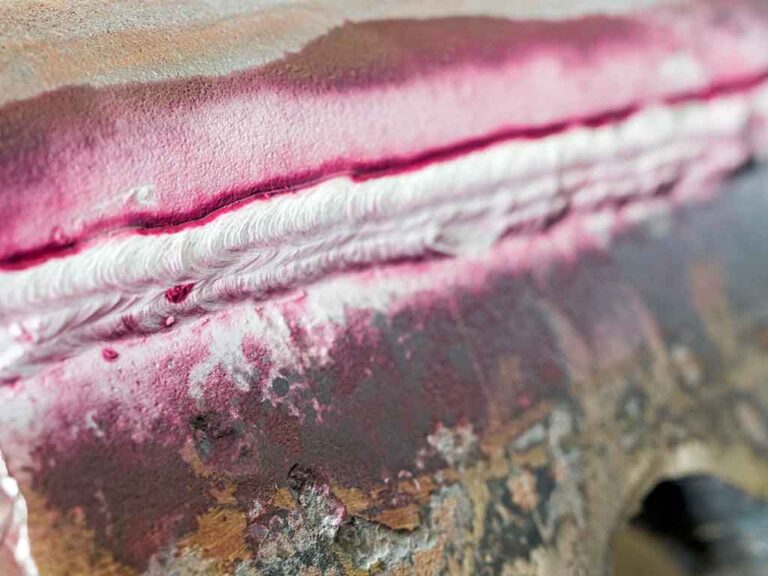
Liquid Penetrants (PT) Level I / II
It is one of the most widely used techniques for detecting cracks and defects in non-porous materials such as metals, plastics, and ceramics.
What you will learn:
- PT Fundamentals: Basic principles of using penetrant liquids to detect flaws.
- Types of liquids: Differences between visible and fluorescent liquids and their application.
- Preparation and Application: How to prepare surfaces and apply penetrating liquids effectively.
- Interpretation of results: Defect assessment and analysis of inspection results.
- International standards: Knowledge of quality standards such as ISO 9712 and ASNT.
Magnetic Particles (MT) Level I/II
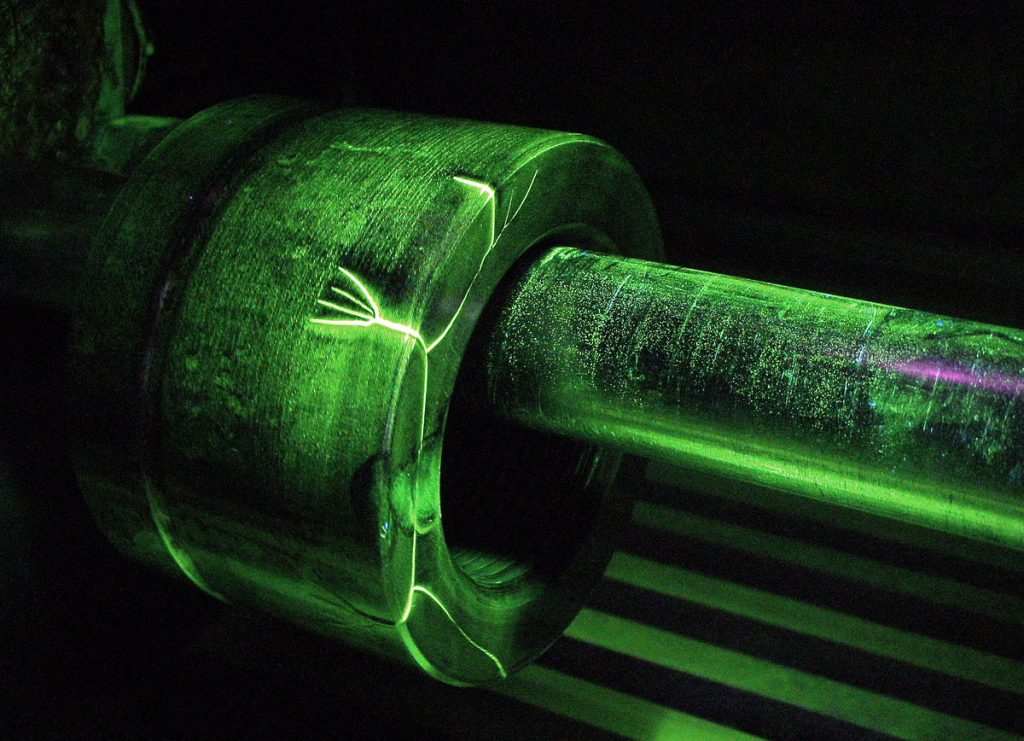
Method that uses magnetic particles to detect discontinuities on the surface or subsurface of ferromagnetic materials.
What you will learn:
- MT Fundamentals: Principles of Magnetic Particle Inspection.
- Types of magnetic particles: You will learn about dry and suspended particles, and when to use them.
- Preparation and Application: How to magnetize materials and apply particles correctly to detect defects.
- Interpretation of results: Accurate evaluation of discontinuities and analysis of the results obtained.
- Interpretation of results: Accurate evaluation of discontinuities and analysis of the results obtained.
Visual Inspection (VT) Level I/II
The most basic technique, which is based on direct observation of the surfaces of materials. It can be done with or without the use of tools such as cameras or magnifying glasses.
What you will learn:
- VT Fundamentals: Principles of visual inspection to detect defects and faults in materials.
- Inspection Tools: Use of cameras, magnifying glasses, and other tools to enhance visual observation.
- Surface Preparation: How to properly prepare and examine surfaces to be inspected.
- Defect Identification: Techniques for recognizing and classifying visible defects in materials.
- International standards: Knowledge of regulations such as ISO 9712 and ASNT applied to visual inspection.

Ultrasound Thickness Measurement (UTME) Level II
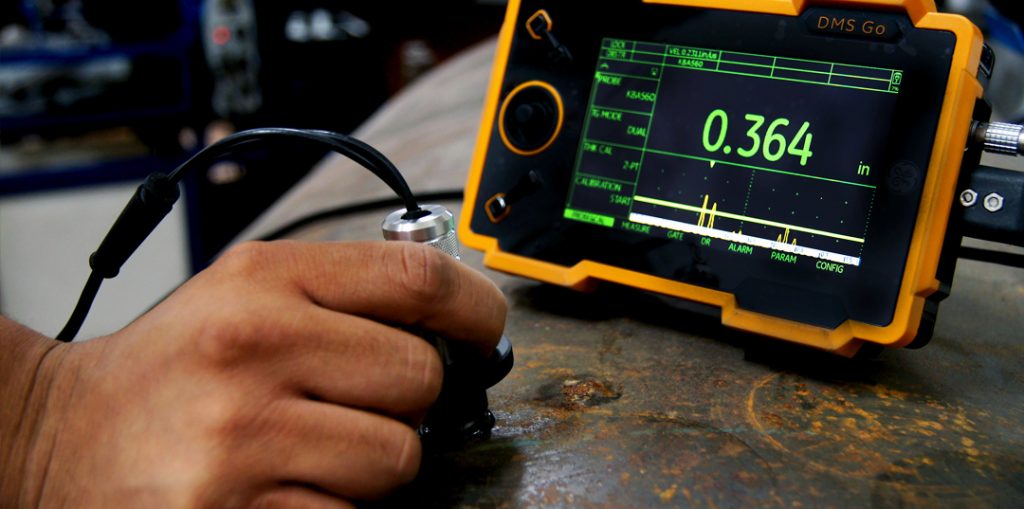
Ultrasonic thickness measurement (UTME) is an essential tool in the inspection of materials and structures, offering an accurate, fast, and non-destructive way to measure the thickness of critical components.
What you will learn:
- Fundamentals of Ultrasound: Basic and theoretical principles of ultrasound techniques applied to thickness measurement.
- Ultrasound equipment and tools: Handling and configuration of ultrasound equipment for thickness measurement.
- Precise Thickness Measurement: Techniques and methods for making accurate measurements on various materials.
- Interpreting Results: How to interpret the data obtained and apply the results effectively in inspections.
- International standards and regulations: Familiarization with ISO 9712, ASNT, and ASTM standards applied to ultrasonic thickness measurement.
Electromagnetism (ET) Level I/II
Method based on the use of electromagnetic fields to detect variations in the electrical conductivity and characteristics of materials.
What you will learn:
- Fundamentals of electricity and magnetism: Understand the relationship between electric charges and magnetic fields.
- Coulomb’s Law and Gauss’s Law: Studies the forces between electrical charges and the generated fields.
- Magnetic Fields: Learn how they are created and how they affect ferromagnetic materials.
- Maxwell’s Equations: The principles governing electric and magnetic fields throughout space.
- Electromagnetic waves: Understand how radio, light, and microwave waves propagate.
- Electromagnetic Radiation: Learn about the emission of energy through accelerated charges.

Ultrasound (UT) Level I/II
It uses ultrasonic waves to detect internal defects, measure material thicknesses, and perform weld inspection.
What you will learn in the UNE NDT Ultrasound course (Level I and II):
- Ultrasound Basics and Equipment: Learn how ultrasonic waves detect defects and become familiar with the equipment and transducers used in testing.
- Calibration and Setup: Adjust and calibrate equipment to obtain accurate measurements.
- Materials Inspection: Performs inspections to detect surface and internal defects in materials.
- Interpreting Results: Learn to read and understand the signals generated by ultrasound equipment.
- Advanced Techniques: Learn methods for detecting defects in thick materials, including high-frequency ultrasound, guided waves, and penetration testing.
- Defect Assessment: Identifies and assesses internal and subsurface defects.
- UNE and international regulations: Learn about UNE regulations and their relationship with international standards such as ISO 9712 and ASNT.

Phased Array Ultrasound (PHAU) Level II
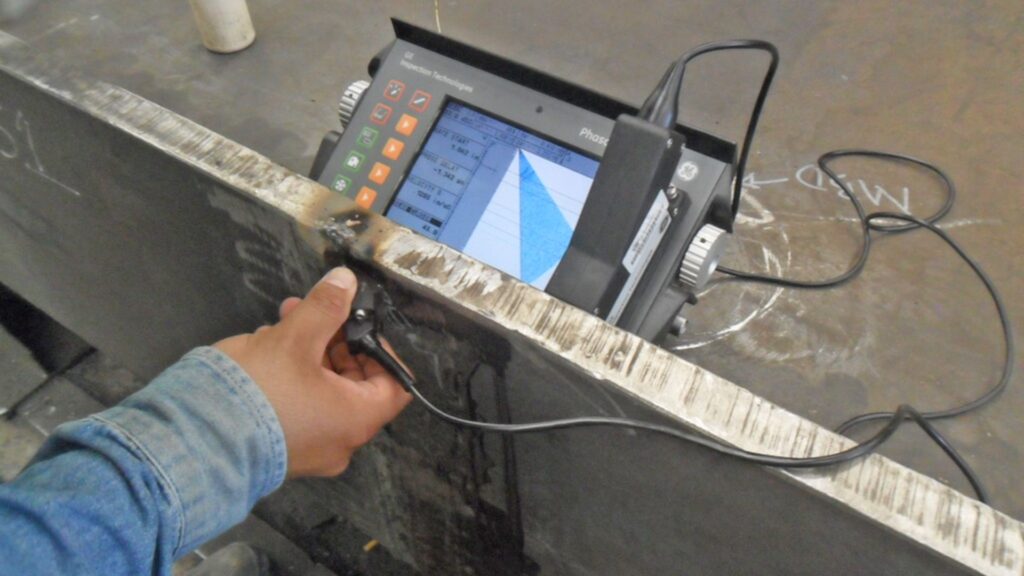
It is an advanced ultrasonic technique used in non-destructive testing (NDT). It relies on the use of transducers containing multiple individual piezoelectric elements, which can be activated in a controlled and sequential manner to manipulate the direction and focus of ultrasonic waves.
What you will learn in the course
- Ultrasound Principles and Phased Array: Learn how ultrasonic waves work and the principles behind phased array technology for advanced inspection.
- Specialized Equipment: Familiarize yourself with phased array transducers and instruments used for high-precision testing.
- Setup and Calibration: Set up equipment and calibrate it correctly for inspections confiables y precisas.
- Basic and advanced inspection: Performs ultrasonic testing on simple and complex materials, detecting surface and internal flaws.
- Complex Defect Analysis: Identify internal defects in greater detail using phased array technology.